Paper question 1
(a)(i) Apparatus used to heat the solution (1 mark)Bunsen burner.
It is the burner under the flask in
Figure 1; its flame supplies the heat.
(a)(ii) Observation on the thermometer (1 mark)The thermometer reading (the mercury level) rises steadily, then stops rising and stays constant when the solution starts boiling.
While the solution is heated, its temperature goes up. At the boiling point the heat is used to change water into steam, so the temperature stops rising.
(a)(iii) Boiling point of the salt solution (1 mark)108∘COn the scale in
Figure 2,
100 to
110 is divided into
10 small divisions, so each division is
1∘C. The top of the mercury column is
8 divisions above
100, so the reading is
108∘C.
Key point: Pure water boils at
100∘C at sea level. Dissolved salt
raises the boiling point, so the salt solution boils above
100∘C.
(b) Completing the table (2 marks)Each row is one trial. Average
=2starting temperature+continuing temperature.
Trial 2 (missing starting temperature):
2x+110=109⇒x+110=218⇒x=108, so the blank is
108.
Trial 3 (missing average):
2109+109=2218=109, so the blank is
109.
| Starts to boil | Continues to boil | Average |
|---|
| Trial 2 | 108 | 110 | 109 |
|---|
| Trial 3 | 109 | 109 | 109 |
|---|
Trial 2 also agrees with the reading in
Figure 2 (
108∘C).
(c)(i) Separating salt solution into salt and water: distillation (3 marks)To get
both the salt and the water, the learners use
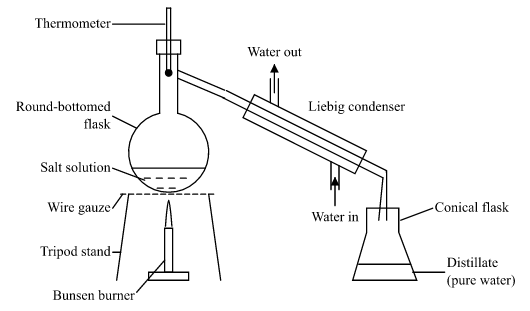
simple distillation. From
Figure 3 they choose: round-bottomed flask, thermometer, Liebig condenser, conical flask, tripod stand and Bunsen burner.
The diagram should show (and label):
1. Salt solution in a round-bottomed flask on a tripod stand (with wire gauze), heated by a Bunsen burner.
2. A thermometer in a cork at the top of the flask, its bulb level with the side arm (it reads the temperature of the vapour).
3. The side arm joined to a Liebig condenser, with cold water going
in at the lower end and
out at the upper end.
4. A conical flask at the end of the condenser collecting the distillate (pure water).
The water boils off as steam, the steam is cooled in the condenser and turns back into liquid water, which collects in the conical flask. The salt stays behind in the round-bottomed flask.
(c)(ii) Two safety precautions (2 marks)Any two of:
1. Add a few anti-bumping (boiling) chips to the flask so the solution boils smoothly and does not splash.
2. Do not make the apparatus airtight: leave the end of the condenser open so pressure does not build up.
3. Do not heat the flask to dryness (it can crack).
4. Handle hot apparatus with tongs or a cloth; do not touch it with bare hands.
5. Wear safety goggles / tie back long hair and loose clothing near the flame.
(Also accepted: let cold water flow through the condenser all the time while heating.)
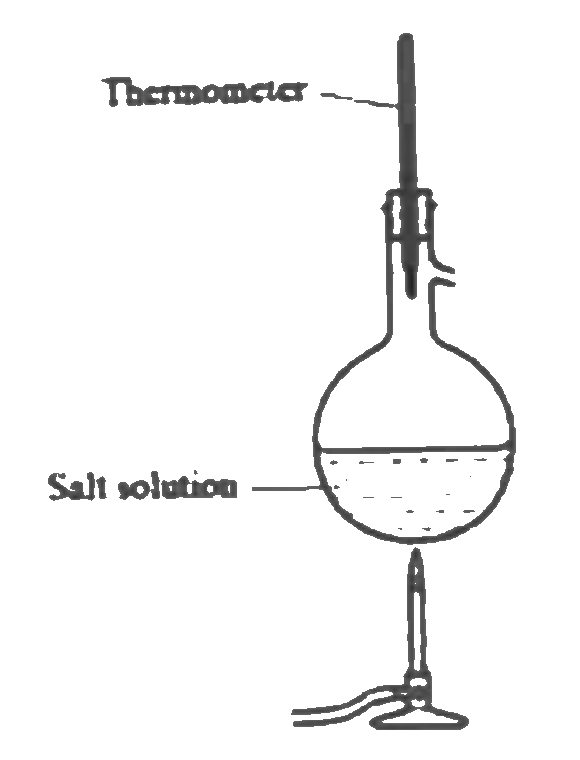 Figure 1(a) (i) From the set-up, identify the apparatus used to heat the solution. (1 mark)(ii) State the observation made on the thermometer when the solution is heated until it starts boiling. (1 mark)(iii) Figure 2 shows the thermometer reading at the point when the solution started boiling.
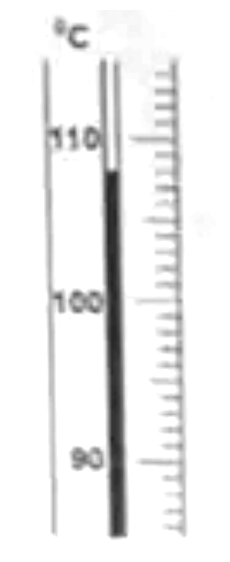 Figure 2State the boiling point of the salt solution. (1 mark)(b) The learners repeated the experiment with two more samples of the same salt solution and recorded the temperature readings in the following table. Complete the table. (2 marks)
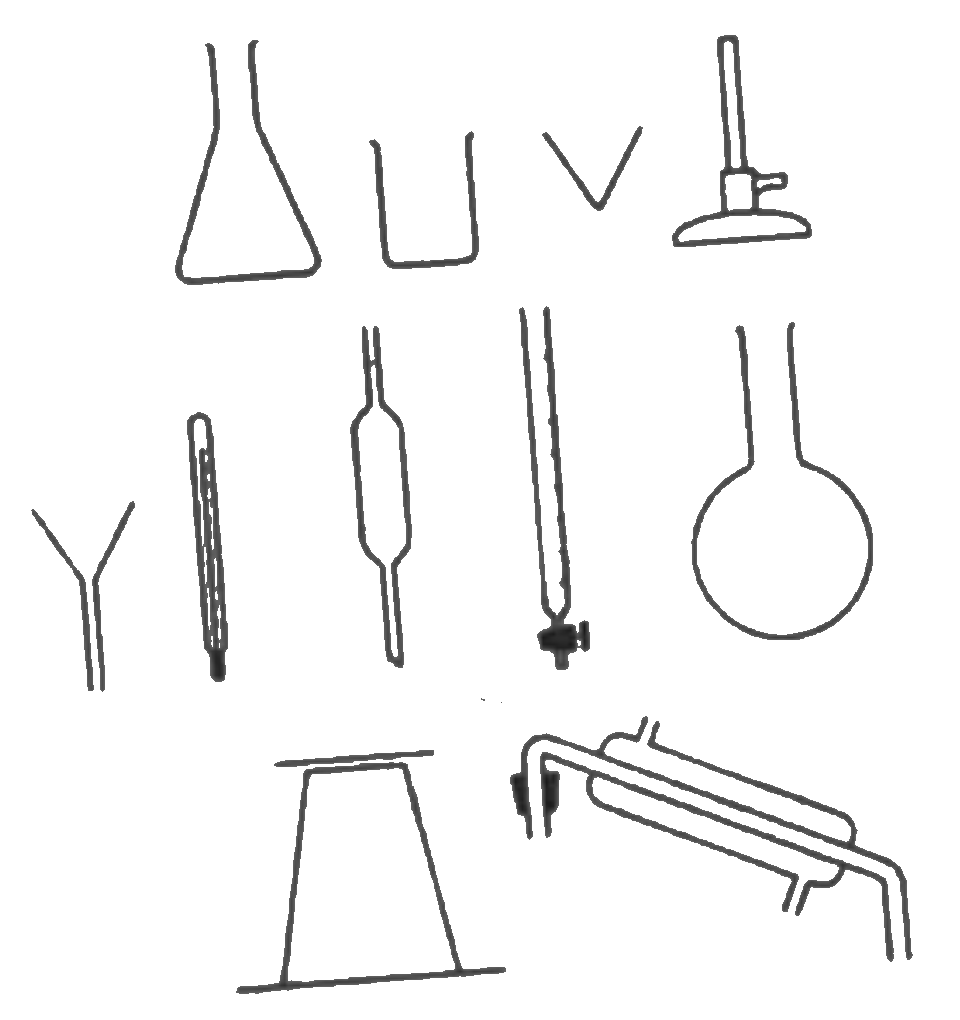 Figure 3(i) Choose the appropriate apparatus from Figure 3 and draw a well labelled diagram to demonstrate the procedure the learners used to separate the salt solution into salt and water. (3 marks)(ii) State two safety precautions that the learners should observe during the experiment. (2 marks)