What we are solvingDefine parthenogenesis, give the value of parthenogenesis and sexual reproduction to aphids,
explain parthenogenesis in bees, and give two sources of variation in sexual reproduction
Chapter: Reproduction
Topic: parthenogenesis; sources of variation
(a) (1 mark)Parthenogenesis is the development of an egg into a new individual without fertilisation
(b)(i) (2 marks)No need to find a mate; every aphid (female) produces young
Very rapid increase in numbers in summer when food (sap) is plenty
Offspring are genetically identical, keeping a combination suited to the good conditions
(b)(ii) (2 marks)Produces genetic variation, so some offspring survive changed conditions
Gives resistant overwintering eggs that survive the cold season
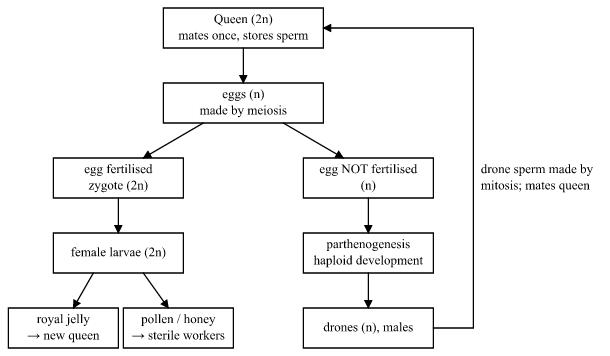
(c) (3 marks)The queen (2n) lays eggs made by meiosis (n)
Fertilised eggs (2n) develop into females: workers, or queens if fed on royal jelly
Unfertilised eggs develop by parthenogenesis into haploid males (drones)
So parthenogenesis decides the sex of the bee and produces the males that fertilise new queens
(d) (2 marks)Crossing over between homologous chromosomes in prophase I of meiosis
Independent assortment of chromosomes in metaphase I
Random fusion of gametes at fertilisation
Answer: (a) development of an unfertilised egg. (b)(i) fast increase, no mate needed; (ii) variation and resistant eggs. (c) unfertilised eggs become drones. (d) crossing over, independent assortment, random fertilisation.