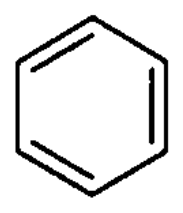
What we are solving(a) Ethanol with concentrated sulphuric acid at 180 °C(b) Benzene with a mixture of concentrated nitric and sulphuric acidsComplete each equation and give the mechanismChapter: Organic chemistryTopic: elimination in alcohols; electrophilic substitution in benzeneConcept and formulas(a) Acid-catalysed dehydration (elimination) of an alcohol gives an alkene(b) Nitration of benzene is electrophilic substitution; the electrophile is the nitronium ion NO2+Working(a)(3½ marks)CH3CH2OHconc. H2SO4180∘CCH2=CH2+H2OMechanism:Step 1: the lone pair on the O atom takes a proton from the acidCH3CH2O¨H+H+→CH3CH2O+H2Step 2: water leaves, giving a carbocationCH3CH2O+H2→CH3C+H2+H2OStep 3: HSO4− removes a proton from the carbon next to the positive carbon; the C=C bond formsH−CH2−C+H2+HSO4−→CH2=CH2+H2SO4The acid is regenerated: it is a catalyst(b)(2½ marks)C6H6+HNO3conc. H2SO4below 55∘CC6H5NO2+H2OProduct: nitrobenzeneMechanism:Step 1: formation of the electrophileHNO3+2H2SO4→NO2++H3O++2HSO4−Step 2: the π electrons of the ring attack NO2+, forming a carbocation (arenium ion, σ-complex)C6H6+NO2+→[C6H6NO2]+Step 3: HSO4− removes the H+ from the carbon carrying NO2; the aromatic ring is restored[C6H6NO2]++HSO4−→C6H5NO2+H2SO4Answer: (a) ethene, CH2=CH2, by protonation, loss of water, loss of H+ (b) nitrobenzene, via NO2+ and the arenium ionTip: In mechanisms, show curly arrows from lone pairs or bonds to the atom being attacked, and show the catalyst regenerated