Test Index
UACE Economics 2024 Paper 1
© africaexams.com
Question : 4
Total: 7
Solution:
What we are solving(a) Account for (give the causes of) price instability of agricultural products in developing countries (10 marks)(b) Suggest measures to stabilise those prices (10 marks)Chapter: Agriculture in development / Price theoryTopic: instability of agricultural prices and price stabilisationKey ideasPrice instability means frequent and large rises and falls in prices from season to seasonDemand for most farm products is price inelastic, so a shift in supply causes a large change in price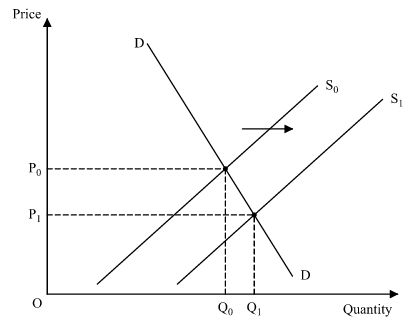 A bumper harvest shifts supply from S0 to S1Quantity rises only from Q0 to Q1, but price falls sharply from P0 to P1Model answer(a) (10 marks)1. Natural factors (weather)Drought, floods and hailstorms cause sudden changes in supply, e.g. maize and beans in drought years2. Price inelastic demandFood demand changes little with price, so supply changes cause big price swings (diagram)3. Price inelastic supply in the short runCrops take a long time to grow, so supply cannot adjust quickly to price changes4. Time lag and cobweb effectFarmers plant more after a high price; the bigger harvest then lowers price, and the cycle repeats5. Perishability and poor storageProduce such as matooke, tomatoes and milk must be sold at once, flooding the market at harvest6. Pests and diseasesOutbreaks such as coffee wilt disease or cassava mosaic suddenly cut supply7. Fluctuations in world demandExport crops depend on world markets; recessions or changes in tastes abroad cut prices, e.g. coffee8. Competition from synthetic substitutesSynthetic fibres and rubber reduce demand for cotton and natural rubber9. Many small, unorganised producersScattered farmers cannot control output or bargain for stable prices; weak cooperatives10. Poor market information and middlemenFarmers do not know market prices; speculators buy cheap and hoard(b) (10 marks)11. Buffer stock schemesBuy produce when prices are low and release it when prices are high12. Guaranteed minimum pricesGovernment or marketing boards set floor prices to protect farmers' incomes13. Improve storage and processingSilos, cold stores and the warehouse receipt system let farmers sell over the year; agro-processing adds value14. Irrigation and modern farmingReduces dependence on rainfall and steadies output15. Pest and disease control and researchResistant varieties from research (e.g. NARO) and extension services reduce crop losses16. Strengthen cooperativesOrganised farmers plan output, store jointly and bargain for better prices17. DiversificationGrow and export a wider range of products so a fall in one price hurts less18. Market information systemsGive farmers current prices through radio, SMS and extension workers19. Wider and regional marketsSell surpluses in EAC and COMESA markets; join international commodity agreements20. Crop insuranceInsurance compensates farmers for weather losses and steadies their incomesAnswer: Causes: weather, inelastic demand and supply, time lag (cobweb), perishability, pests, world demand changes, synthetic substitutes, unorganised farmers; measures: buffer stocks, floor prices, storage and processing, irrigation, research, cooperatives, diversification, market information, wider markets, insuranceTip: The inelastic demand diagram earns credit; label both supply curves and both prices
© africaexams.com
Go to Question:
Advertisements