What we are solvingA teacher drew a circuit that makes a small voltage change bigger
We must explain how this circuit works
The input is only 5 millivolts
The circuit should give an output 400 times larger
Chapter: Electronics
Topic: The transistor as an amplifier
Concept and formulasThe device in the middle is a transistor
It has 3 terminals, the base B, the collector C and the emitter E
A small current into the base controls a large current through the collector
IC=βIBHere the current gain is 150
This circuit is called a common emitter amplifier
The emitter is shared by the input and the output
Answer, step by stepFirst, the 100 kΩ resistor sends a small steady current into the base
This keeps the base emitter junction forward biased, so the transistor is on
Second, the small input voltage passes through capacitor
C1 to the base
It makes the base current rise and fall a little
Third, the collector current rises and falls 150 times as much
Fourth, this changing current flows through the load resistor
So the voltage across the load resistor changes by a large amount
V0=VCC−ICRLWhen the input rises, the output falls
So the output is an enlarged copy of the input, turned upside down
Last, capacitor
C2 passes only the changing part to the output
ConclusionA small change at the base gives a large change at the collector
The load resistor turns that current change into a large voltage change
That is how the circuit amplifies
In an amplifier, the input goes to the base
The output is taken from the collector side
Answer: Common-emitter transistor amplifier
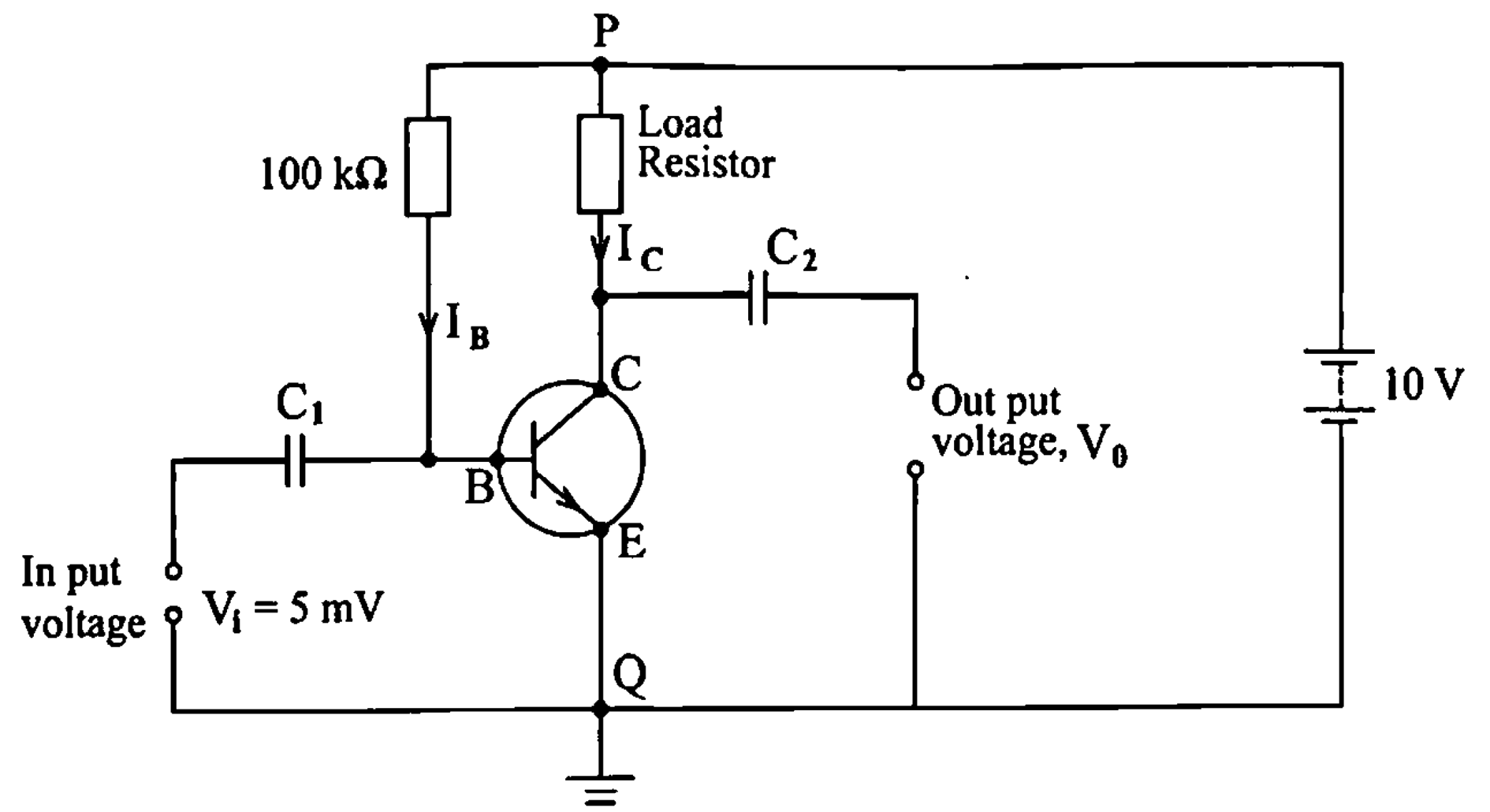 Fig. 1Using the illustration in figure 1, the teacher informed the learners that such a device can produce a voltage amplification of 400. However, the teacher neither explained how the device works nor determined the value of the load resistor, but provided the following information: and current gain .