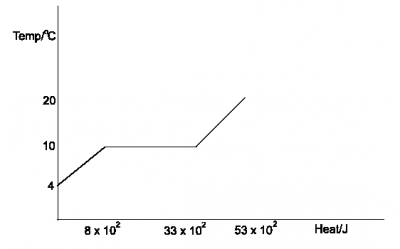
Concept:On a heating curve, the flat (horizontal) part is the change of state: heat is absorbed but the temperature stays constant. The heat taken in along this flat part is the latent heat
Q=mL.
Formula used:L=mQGiven (read from the graph):The temperature stays constant (flat part) from
8×10² J to
33×102 J.
m=0.02 kgSolution:Heat used for the change of state:
Q=33×102−8×102=25×102=2500 JL=mQ=0.022500=125000=1.25×10⁵ Jkg−1Key point: Use only the heat along the flat part of the curve. The sloping parts heat the substance without a change of state. The value printed as the key,
2.25×10⁶ Jkg−1 (the textbook value for water), comes from taking
(53−8)×103 J, which includes a sloping part and uses
103 instead of the
102 shown on the graph; none of the printed options matches the graph, so option C has been replaced by the value the graph gives.
Answer:Option C (
1.25×10⁵ Jkg−1)