Paper question 3
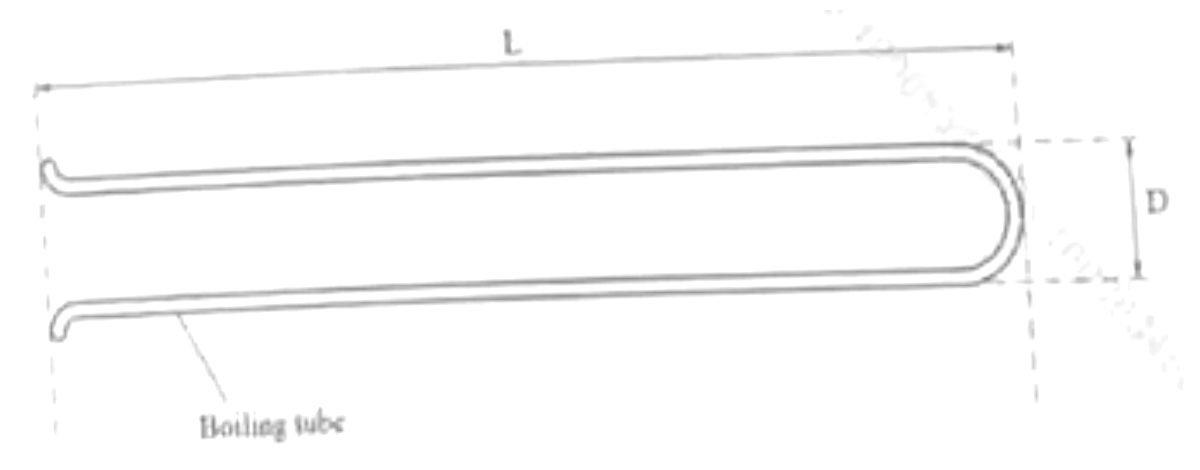
(a) Measuring L and D (1 mark each)(i)
L=8.5 cm(ii)
D=1.3 cmPlace the zero mark of the ruler at one end of each double-headed arrow and read the other end to the nearest
0.1 cm. On the printed paper the arrows measure about
8.5 cm and
1.3 cm (these values are given under
Figure 7, because the picture on a screen is not full size).
(b)(i) Volume of the boiling tube (2 marks)Formula used: V=3.142×(2D)2×L (volume of a cylinder,
πr2h)
Radius
=2D=21.3=0.65 cm(0.65)2=0.4225 cm2V=3.142×0.4225×8.5=3.142×3.59125≈11.28 cm3 (about
11.3 cm3)
(b)(ii) Volume in SI units (1 mark)The SI unit of volume is the cubic metre (
m3).
1 m=100 cm, so
1 m3=1003=1000000 cm3.
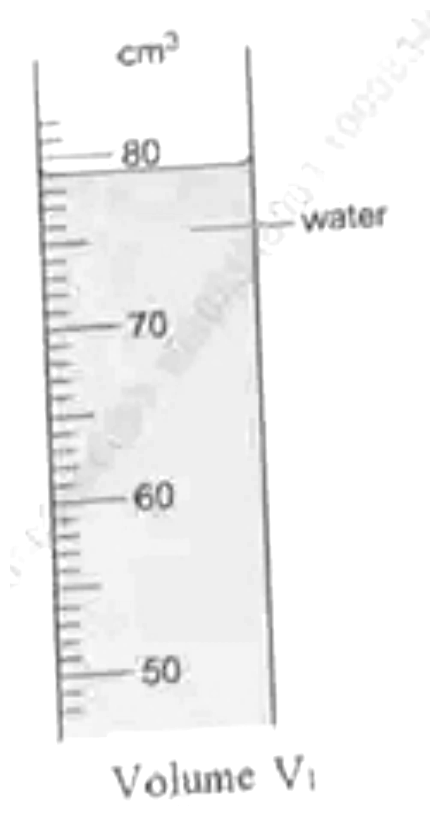
V=100000011.28=0.00001128 m3=1.128×10⁻⁵ m3(c)(i) Reading V1 (1 mark)V1=79 cm3In
Figure 8, the scale goes from
70 to
80 in
10 small divisions, so each division is
1 cm3. The water level is
1 division below
80.
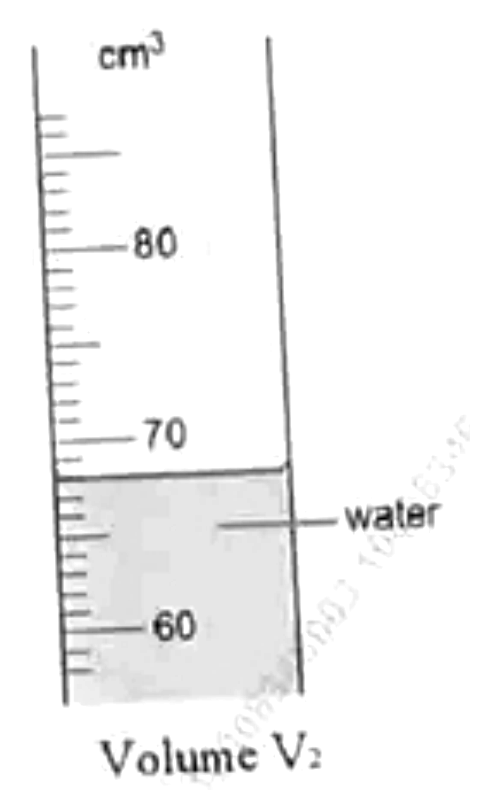
(c)(ii) Reading V2 (1 mark)V2=68 cm3In
Figure 9, the water level is
2 divisions below
70.
(c)(iii) Maximum volume of water the tube holds (1 mark)The water that left the measuring cylinder is the water that filled the boiling tube.
V=V1−V2=79−68=11 cm3(d)(i) More accurate method (1 mark)Method 2 (using the measuring cylinder / water).
(d)(ii) Reason (1 mark)Method 2 measures the actual space inside the tube directly. Method 1 treats the tube as a perfect cylinder: it ignores the rounded bottom and the thickness of the glass (D measured on the outside includes the glass), so it gives a slightly larger value (
11.28 cm3 against
11 cm3).
(Also accepted: Method 1 has more measurements and rounding, so more chances of error.)