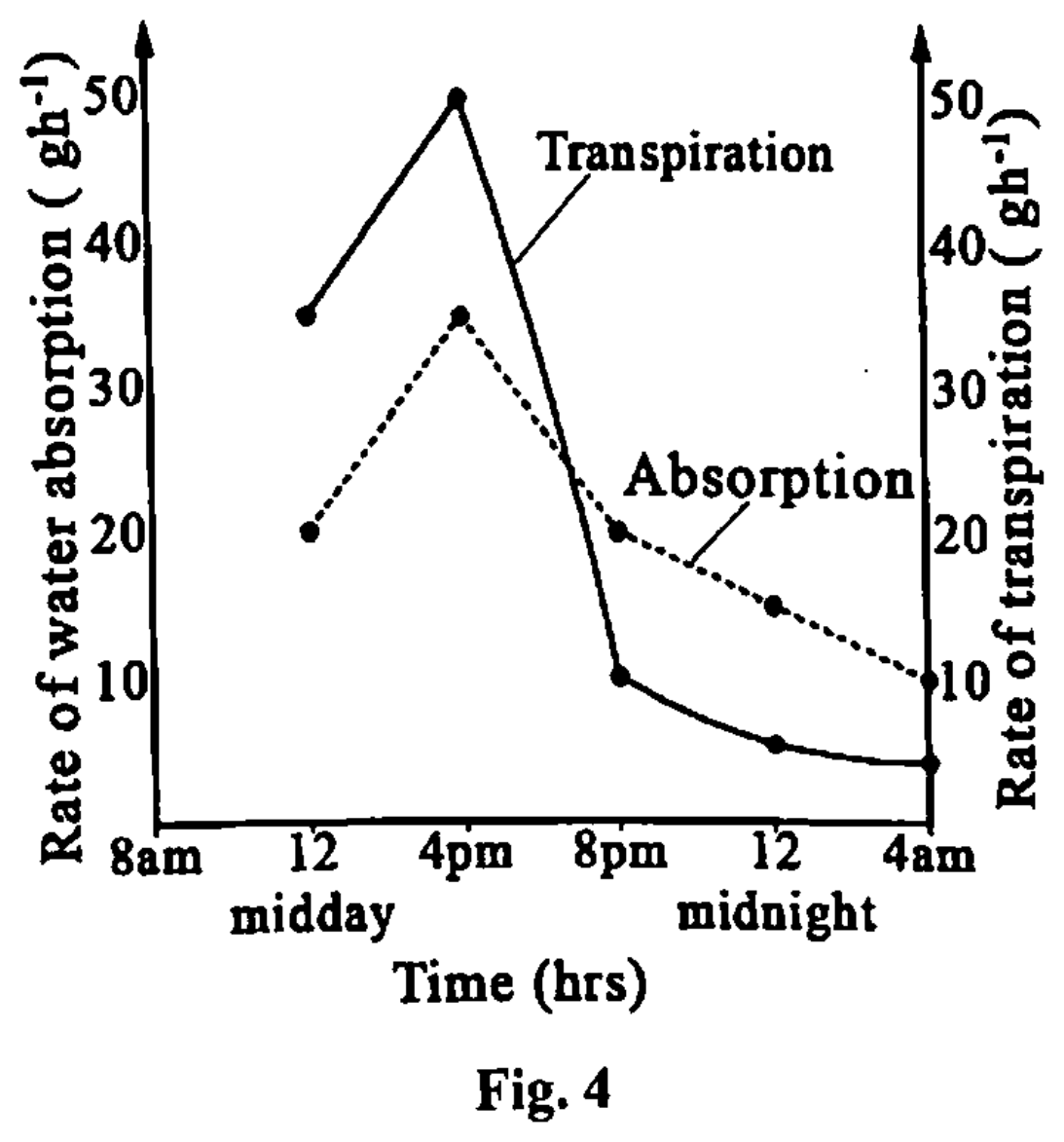
What we are solvingFig. 4 compares the rates of transpiration and water absorption over a day
Readings: at 12 midday transpiration
35 g h−1, absorption
20 g h−1; at 4 pm transpiration
50 g h−1, absorption
35 g h−1; after 8 pm absorption is above transpiration
Explain the relationship, the night-time difference and the effect of sunken stomata
Chapter: Transport in plants
Topic: transpiration and water uptake
(a) (4 marks)Description: from 12 midday to 4 pm both rates rise (transpiration
35→50 g h−1, absorption
20→35 g h−1), and absorption stays lower than transpiration
1. Rising light intensity and temperature open stomata wider and increase evaporation, so transpiration rises
2. Transpiration creates a pull (tension) on the water column in the xylem; by cohesion and adhesion this pull reaches the roots
3. So more water enters the roots: absorption rises because of transpiration
4. Absorption is lower and lags behind because of resistance to water flow through the root and stem, so the plant develops a water deficit in the afternoon
(b) (3 marks)After 8 pm absorption is higher than transpiration
1. In darkness stomata close, the temperature falls and humidity rises, so transpiration falls sharply
2. Absorption continues because the plant refills the water deficit built up during the day (cells regain turgor)
3. Root pressure from active uptake of mineral ions continues at night, pushing water in
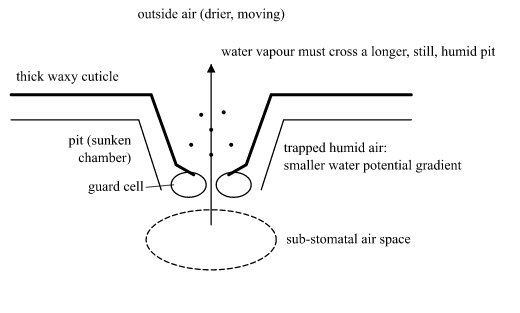
(c) (3 marks)1. Sunken stomata lie in pits below the leaf surface
2. Still, moist air is trapped in the pit, so humidity just outside the pore is high
3. The water vapour diffusion gradient between the leaf air spaces and the outside is reduced, and the diffusion path is longer
4. The pit shelters the pore from wind, which would otherwise carry the moist air away; so less water is lost (e.g. pine needles, xerophytes)
Answer: (a) both rise; transpiration pull drives absorption, which lags and stays lower (water deficit). (b) at night stomata close so transpiration falls, while absorption continues to replace the deficit and by root pressure. (c) trapped humid air lowers the diffusion gradient.
Tip: When a graph is given, quote the values you read from it with units.