Test Index
UACE Biology 2026 Paper 1 (Theory)
Show Para
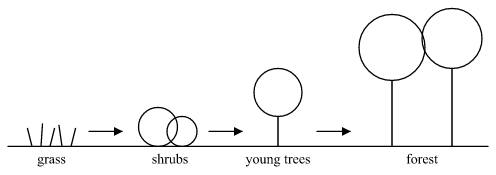
Question Numbers: 9-10Item 5Kimani forest was a thick forest that consisted of tall trees with black barks. The forest was a home to two varieties of squirrels (black-coated and brown-coated) and foxes which fed on the squirrels. The two varieties of squirrels occasionally mated producing offspring with both brown and black patches in their coats. However, sugarcane growers encroached on the forest, cut down trees, burnt bushes and also used herbicides transforming the original flora into short brown grasses.Farmers near the forest complained about the squirrels, especially the brown variety for destroying their crops. This prompted an ecologist to retrieve data from past studies about the population of squirrels before the forest encroachment as shown in table 6.Table 6: Number of squirrels before forest encroachment
After the forest encroachment, the ecologist estimated the population of black squirrels to be 1125. To estimate the population of brown squirrels, he collected data about brown squirrels where he trapped some, marked and released them. After some time, he went back and trapped the brown squirrels for the second time, counted them and presented the results in table 7.Table 7: Data about brown squirrels after forest encroachment
The ecologist stated that his estimate of brown squirrels has high degree of accuracy. The ecologist recommended that the government should ensure the restoration of the forest ecosystem. The government needs strategies for restoration of the ecosystem. However, each strategy should include its effectiveness, how it solves the challenge, its dangers/negatives and an appropriate way to use each strategy.
| Squirrel variety | population |
|---|---|
| Brown | 411 |
| Black | 3427 |
| Activity | Number |
|---|---|
| Captured, marked and released | 420 |
| Second capture | 300 |
| Number marked and recaptured | 30 |
© africaexams.com
Question : 10
Total: 12
Go to Question: