Test Index
UACE Biology 2026 Paper 1 (Theory)
Show Para
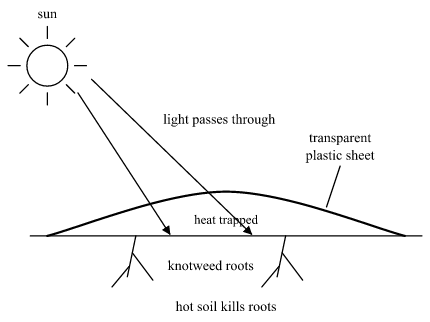
Question Numbers: 11-12Item 6Sam planted knotweed plants to make a natural fence around his garden and poultry farm. He reared two breeds of high egg-laying ducks; the black ducks with yellow beaks and the white ducks with grey beaks.When the two breeds mated, all the ducklings were black with yellow beaks. One fateful evening, all the adult ducks escaped from their shelter, ate the fruits of the knotweed plants which poisoned and killed them. Sam then remained with the ducklings that he reared to maturity. The ducklings also frequently ate a few leaves and fruits from the knotweed plants but they remained unharmed.In an attempt to recover his original breed characteristics, Sam allowed the ducks to breed which produced 139 new ducklings. Of these, 102 were black with yellow beaks and 37 were white with grey beaks.Sam’s concern was why the different proportions of phenotypes of ducklings and how the knotweed plants affected the sets of ducks differently.Sam also noted that the knotweed plants grew into a dense thicket that overshadowed his crops in the garden and also harboured many kinds of insect, snakes and birds that were a threat to his ducks and crops.To eliminate the threat, Sam sprayed the thicket with a chemical. Unfortunately, the chemical only killed insects and snakes without affecting the thicket.Sam was then advised to try the following strategies to remove the thicket.To;I. burn the thicket, orII. use animals that are heavy feeders and resistant to poisons in the knotweed to feed on the thicket, orIII. cover the soil with thick transparent plastic sheets that heat the soil and kill the knotweed roots.Sam needs to understand the effectiveness of each strategy before any action is taken to avoid danger to the ecosystem.
© africaexams.com
Question : 12
Total: 12
Go to Question: