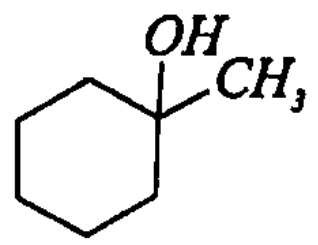
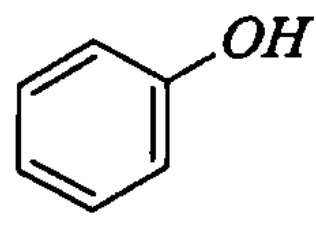
What we are solvingFour organic reactions: complete each equation and name the main organic productChapter: Organic chemistryTopic: reactions of carboxylic acids, alcohols, salts of acids and phenolsConcept and formulasPCl5 replaces −OH by −ClHot Al2O3 dehydrates an alcohol to an alkene; the more substituted alkene is the major product (Saytzeff rule)Heating a calcium salt of a carboxylic acid gives a ketone and calcium carbonateAn acid chloride acylates the −OH of phenol to give an esterWorking(a)(1½ marks)CH3COOH+PCl5→CH3COCl+POCl3+HClName: ethanoyl chloride(b)(1½ marks)1-methylcyclohexan-1-ol loses H2O: OH from C-1 and H from a ring carbon next to itC6H10(OH)CH3Al2O3heatC6H9CH3+H2OThe double bond forms inside the ring (C-1=C-2), the more substituted alkeneName: 1-methylcyclohexene(c)(1½ marks)(CH3COO)2CaheatCH3COCH3+CaCO3Name: propanone(d)(1½ marks)The acyl group CH3CO− replaces the H of the phenolic −OHC6H5OH+CH3COClAlCl3CH3COOC6H5+HClName: phenyl ethanoateKey point: on strong heating with excess AlCl3 this ester rearranges (Fries rearrangement) to 2- and 4-hydroxyphenylethanone; under the conditions shown the ester is the productAnswer: (a) CH3COCl, ethanoyl chloride (b) 1-methylcyclohexene (c) CH3COCH3, propanone (d) CH3COOC6H5, phenyl ethanoateTip: Always write the inorganic by-products (POCl3, HCl, CaCO3): they carry marks