What we are solvingA fieldwork study of a quarry
(a) topic and objectives
(b) a sketch-map with the quarry, physical features and land-use types
(c) the impact (positive and negative) of the quarry on the surrounding environment
(d) recommendations to the quarry workers
Chapter: Fieldwork
Topic: fieldwork on mining and quarrying
Key ideasA
quarry is an open pit where rock (granite, limestone, sandstone), murram, sand or clay is dug from the surface
Stone quarries in Uganda supply aggregates for roads and buildings, e.g. around Kampala, Mukono, Wakiso and Jinja
Environment here means the physical (land, soil, water, vegetation, air) and human (people, settlement, economy) surroundings
A sketch-map needs: a frame, title, north arrow, "not to scale" and clearly labelled features (or a key)
Model answerModel example of a study (use your own quarry and findings in the exam):Study area: a granite stone quarry on the southern slope of a hill beside a main road near a growing town
(a) (5 marks)(i) Topic: The impact of stone quarrying on the environment of the area around the quarry
(ii) Objectives:1. To find out the location and size of the quarry
2. To identify the methods used to extract and process the stone
3. To examine the impact of the quarry on the physical and human environment
4. To identify the problems faced by people working in the quarry
5. To suggest measures to reduce the negative effects
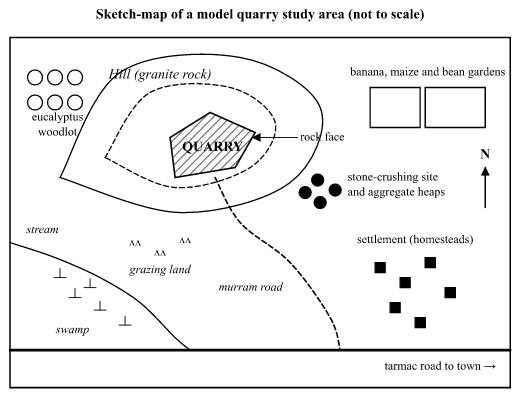
(b) (8 marks)Sketch-map of the study area:
Location of the quarry: on the southern slope of the granite hill, joined to the tarmac road by a murram road
Physical features: the hill (rock outcrop), the rock face of the quarry, the stream and swamp in the valley
Land-use types: quarrying, stone crushing, settlement, crop gardens (bananas, maize, beans), eucalyptus woodlot, grazing land, transport (roads)
(c) (8 marks)Positive impact1.
Employment: many young people work as stone breakers, loaders and lorry drivers, earning daily income
2.
Building materials: aggregates, hardcore and ballast are sold for local houses and roads
3.
Growth of trade and settlement: food kiosks, shops and rental houses grew near the quarry
4.
Improved roads: the murram access road built for lorries is also used by farmers to take produce to market
Negative impact5.
Land degradation: deep pits and bare rock faces; land is lost to farming; the landscape is scarred
6.
Deforestation and soil erosion: vegetation is cleared to reach the rock; loose soil is washed into the stream, causing siltation
7.
Pollution: dust from crushing and blasting covers crops and houses; noise from blasting and crushers; cracks in nearby houses from vibration
8.
Water and health problems: abandoned pits collect stagnant water that breeds mosquitoes; dust causes chest and eye diseases; accidents from falling rocks
(d) (4 marks)1. Wear protective gear: helmets, goggles, gloves, boots and dust masks
2. Water the crushing area to reduce dust and use safe, controlled blasting at agreed times
3. Refill or fence abandoned pits and plant trees and grass on worked-out areas (land rehabilitation)
4. Form a workers' association or SACCO to save money, get first-aid kits and demand fair prices for stone
ConclusionThe quarry gives jobs, income and building materials, but it degrades land, pollutes the air and water and endangers health; careful management and rehabilitation can keep the benefits while reducing the damage
Answer: Topic and objectives stated; sketch-map shows the quarry, hill, stream, swamp, roads, settlement, gardens and woodlot; four positive and four negative impacts; four recommendations
Tip: Give the sketch-map a title, frame, north arrow and "not to scale"; each one earns marks