What we are solvingA photograph interpretation question
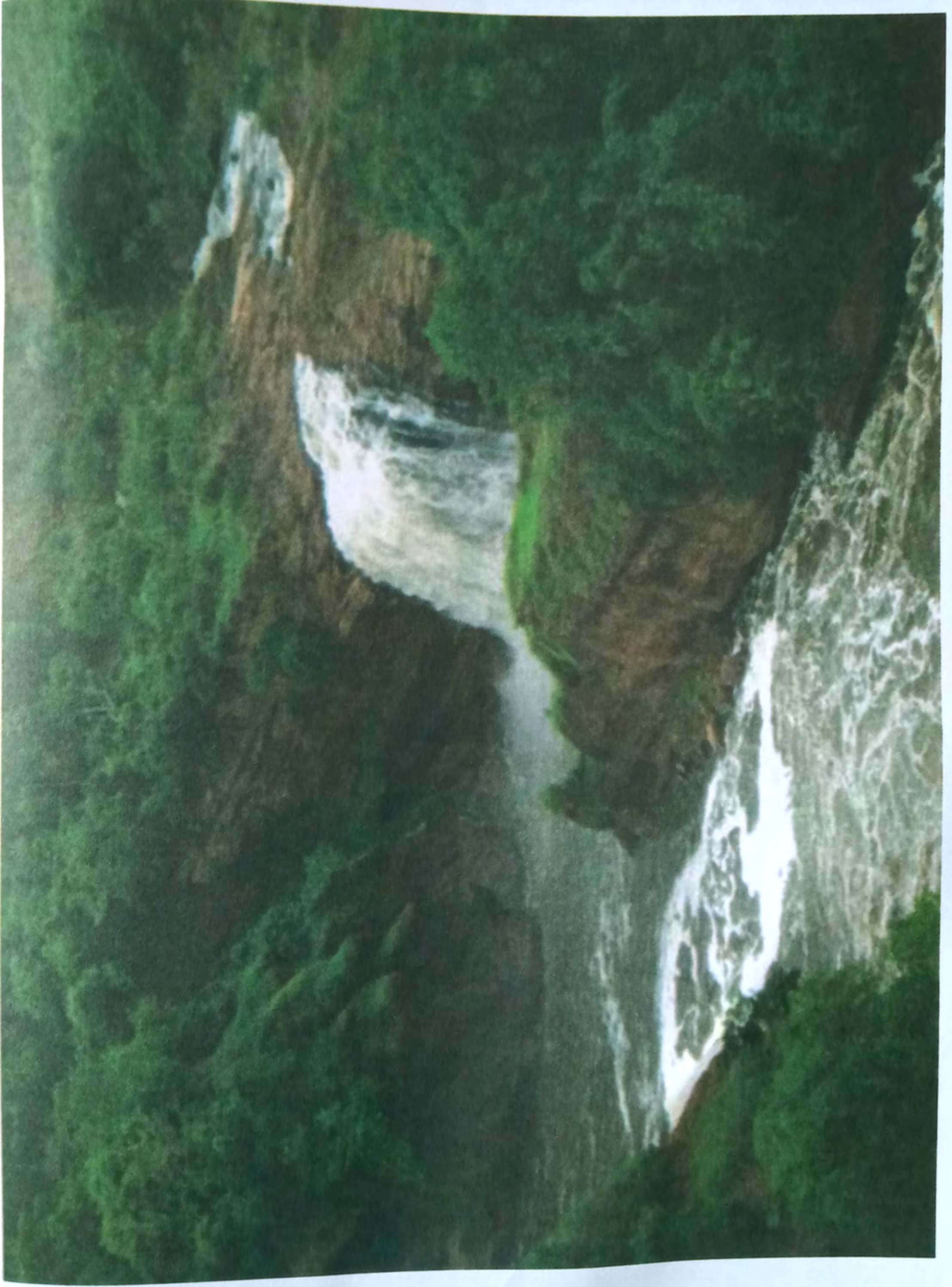
The photograph shows a large river plunging through a very narrow cleft in rock into a deep, forested gorge, with wide white-water rapids beside it
We must sketch it, explain how the waterfall formed, recommend economic activities and say where in East Africa it could be
Chapter: Fluvial processes; photograph interpretation
Topic: waterfalls, gorges, rapids; landscape sketch
Key ideasA landscape sketch divides the photograph into foreground, middle ground and background
A waterfall forms where a river drops vertically over a steep step in its bed
Steps form at a band of hard (resistant) rock, at a fault scarp or rift escarpment, or at the edge of a plateau
The view matches Murchison (Kabalega) Falls: the Victoria Nile squeezes through a gap about 7 m wide and drops about 43 m over the Rift Valley escarpment
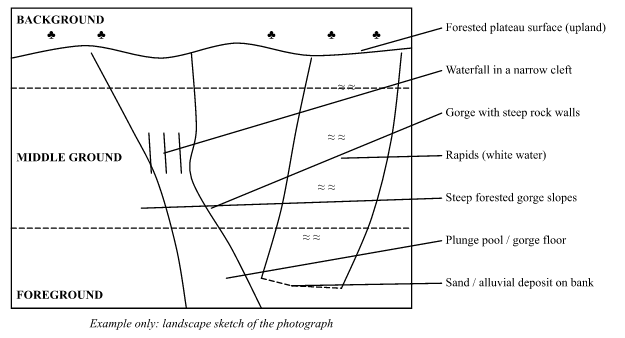
Model answer(a) (8 marks)Draw a frame the same shape as the photograph; divide it with faint lines into foreground, middle ground and background
Title: "Landscape sketch of the area shown in the photograph"
(Example only: your sketch should follow the photograph you see)
Mark and label any:
(i)
Two physiographic regions: the forested plateau/upland surface; the gorge (deep valley); the river channel
(ii)
Two drainage landforms: waterfall; rapids; gorge; plunge pool
(iii)
One depositional feature: sand/alluvial deposit on the river bank (or a sand bar)
(iv)
One erosional feature: gorge, steep rock walls (cliffs), plunge pool or the narrow cleft
(b) (8 marks)1. Presence of hard, resistant rockBare rock walls in the middle ground show hard crystalline rock
The river cuts down slowly through it, leaving a step
2. A steep break of slope (escarpment/fault)The water drops vertically into a deep gorge
At Murchison the Nile crosses the edge of the Albertine Rift Valley escarpment
3. Large volume of waterWide white-water rapids and thick spray show a big, permanent river
A big discharge gives strong hydraulic action and abrasion
4. Narrowing of the channelThe river is forced through a very narrow cleft
Speed and erosive power increase there, deepening the fall
5. Steep gradient upstreamRapids above the fall show the bed falling steeply
The water arrives fast and erodes vertically
6. Vertical erosion and undercuttingHydraulic action, abrasion and pot-holing in the plunge pool undercut the face
The overhanging rock collapses and the fall retreats upstream, forming the gorge
7. Heavy, reliable rainfallDense green forest on all slopes shows a wet climate
This keeps the river flowing all year
(c) (8 marks)1. TourismReason: the spectacular waterfall, gorge and forest attract tourists (boat trips, hiking to the top of the falls)
2. Hydro-electric power generationReason: a large permanent river with a big head of falling water (but care is needed to protect the scenery)
3. Forestry and forest conservationReason: thick natural forest; can be conserved for tourism, research and as a water catchment
4. Wildlife conservation (national park)Reason: forest and riverine habitat support animals and birds, as in Murchison Falls National Park
5. Fishing (including sport fishing)Reason: the plunge pool and river below a fall are rich in fish, e.g. Nile perch below Murchison Falls
6. Research and educationReason: rocks, the gorge, river processes and forest ecology are good for field study
7. Water supply and irrigationReason: the reliable river can be tapped for domestic use and irrigation downstream
(d) (1 mark)Area:
Murchison (Kabalega) Falls, in Murchison Falls National Park, north-western UgandaReasons: a big river forced through a very narrow rock cleft into a gorge; rapids above the falls; thick riverine forest on the escarpment slopes
Answer: (a) sketch with plateau, gorge, waterfall, rapids, sand deposit, plunge pool; (b) hard rock, rift escarpment, large volume, narrow cleft, steep gradient, undercutting, reliable rain; (c) tourism, HEP, forestry, wildlife, fishing, research; (d) Murchison (Kabalega) Falls, Uganda
Tip: In photograph questions, quote what you can SEE in the photograph as your evidence