Test Index
UACE Geography 2024 Paper 1 (Physical Geography)
© africaexams.com
Question : 7
Total: 8
Solution:
What we are solving(a) show the differences between convectional and relief (orographic) rainfall(b) explain what controls how rainfall is distributed over East AfricaChapter: ClimateTopic: types of rainfall; rainfall distribution in East AfricaKey ideasAll rain forms when moist air rises, expands, cools to its dew point and condenses into cloudsConvectional rainfall: rain from air that rises because the ground is strongly heatedRelief (orographic) rainfall: rain from moist air forced to rise over a highland barrierModel answer(a) (10 marks)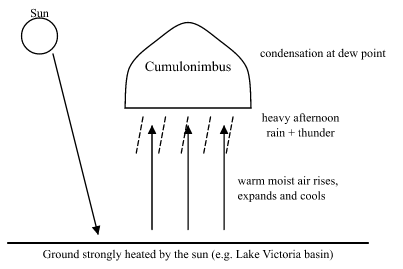
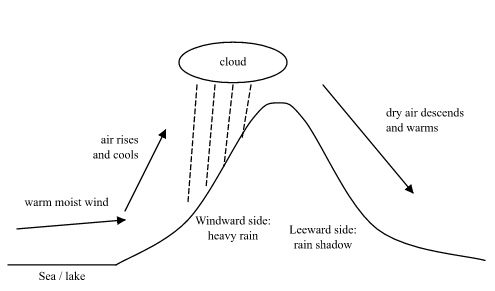 1. CauseConvectional: intense heating of the ground makes warm air riseRelief: a mountain barrier forces moist wind to rise2. Where it fallsConvectional: hot, wet lowlands and lake basins, e.g. the Lake Victoria basinRelief: windward slopes of highlands, e.g. Mt Elgon, Rwenzori, Kenya highlands3. TimeConvectional: usually in the afternoon or evening, almost daily in rainy seasonsRelief: any time of day, whenever the moist wind blows4. CloudsConvectional: towering cumulonimbus cloudsRelief: layered stratus and nimbostratus clouds5. Nature of the rainConvectional: heavy downpours of short duration with thunder, lightning and sometimes hailRelief: steady, prolonged, less intense rain or drizzle6. ExtentConvectional: local and scatteredRelief: extensive along the windward side, with a dry rain shadow on the leeward side7. SimilarityBoth form when rising air cools to dew point and condenses(b) (15 marks)1. Apparent movement of the overhead sun and the ITCZAreas near the equator (Kampala, Kisumu) get two rainy seasons (March–May, September–November)Areas farther north or south (Gulu, Tabora) get one rainy season2. Relief and altitudeWindward slopes of Mt Elgon, Rwenzori and the Kenya highlands get over 1,500 mmLeeward areas and rift floors (Kasese, Lake Magadi, Amboseli) lie in rain shadows3. Large water bodiesLake Victoria supplies moisture and lake breezes, giving heavy convectional raine.g. Kalangala and the Ssese islands over 2,000 mm4. Prevailing windsSouth-east trades from the Indian Ocean bring moisture to the coast and the southNorth-east trades from dry Arabia are dry, so north-eastern Kenya is arid5. Ocean currentsWarm currents along the coast add moistureCold upwelling off Somalia makes the north-east coast and Somalia dry6. Distance from the sea (continentality)Rainfall decreases inland from the coast, e.g. dry central Tanzania (Dodoma)7. Vegetation coverForests (Mabira, Budongo) add moisture by transpiration and raise local rainfall8. Human activitiesDeforestation and swamp drainage reduce rainfall; reservoirs and afforestation can increase it9. Ocean-atmosphere eventsEl Niño and the Indian Ocean Dipole bring years of very heavy or very low rainfallAnswer: (a) convectional: ground heating, afternoon, cumulonimbus, heavy short storms, local; relief: barrier, any time, stratus, steady, windward slope + rain shadow; (b) ITCZ/overhead sun, relief, lakes, winds, ocean currents, continentality, vegetation, human activities, El Niño/IODTip: In "distinguish" questions, set each pair of contrasts side by side
© africaexams.com
Go to Question:
Advertisements