Test Index
UACE Chemistry 2022 Paper 2 (Theory)
© africaexams.com
Question : 7
Total: 8
Solution:
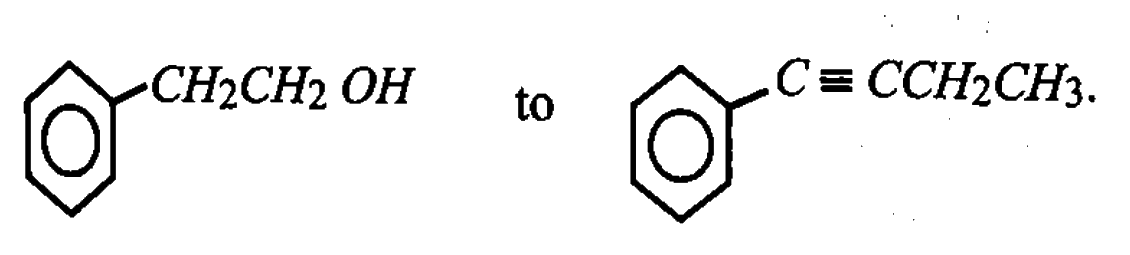
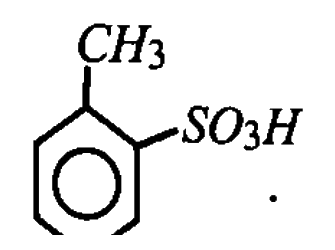
What we are solvingFive organic conversions: give the equation, reagent and condition for every stepChapter: Organic chemistry (carbonyl compounds, haloalkanes, alkynes, aromatic compounds)Topic: synthesis routes and conversionsConcept and formulasPlan backwards from the product: look at the change in the carbon skeleton and in the functional groupAdd one carbon with KCN; add carbons to an alkyne through its sodium salt; build benzene from ethyne(a) (5½ marks)Propanone → propan-1-ol: the OH must move from C-2 to C-1, so go through propene and add HBr against Markovnikov.Step 1: reduce with lithium aluminium hydride in dry ether (or sodium borohydride):CH3COCH3+2[H]→CH3CH(OH)CH3Step 2: dehydrate with concentrated sulphuric acid at about 170 ∘C (or conc. H3PO4, heat):CH3CH(OH)CH3→CH3CH=CH2+H2OStep 3: hydrogen bromide in the presence of an organic peroxide (anti-Markovnikov addition):CH3CH=CH2+HBr→CH3CH2CH2BrStep 4: boil (reflux) with aqueous sodium hydroxide:CH3CH2CH2Br+NaOH(aq)→CH3CH2CH2OH+NaBr(b) (2½ marks)One carbon is added, so use the cyanide ion.Step 1: reflux with potassium cyanide in ethanol:CH3CH2I+KCN→CH3CH2CN+KIStep 2: reflux with dilute hydrochloric (or sulphuric) acid to hydrolyse the nitrile:CH3CH2CN+2H2O+H+→CH3CH2COOH+NH4+(c) (5½ marks)2-phenylethanol → 1-phenylbut-1-yne: make the side chain an alkyne (C6H5C≡CH), then add an ethyl group.Step 1: dehydrate with concentrated sulphuric acid at 170 ∘C (or Al2O3, heat):C6H5CH2CH2OH→C6H5CH=CH2+H2OStep 2: bromine in tetrachloromethane at room temperature:C6H5CH=CH2+Br2→C6H5CHBrCH2BrStep 3: excess hot ethanolic potassium hydroxide (or sodamide), removing two HBr:C6H5CHBrCH2Br+2KOH→C6H5C≡CH+2KBr+2H2OStep 4: sodium (or sodamide) in liquid ammonia forms the sodium alkynide:2C6H5C≡CH+2Na→2C6H5C≡CNa+H2Step 5: react with bromoethane:C6H5C≡CNa+CH3CH2Br→C6H5C≡CCH2CH3+NaBr(d) (2½ marks)2-bromobutane → butanone: substitute Br by OH, then oxidise the secondary alcohol.Step 1: boil with aqueous sodium hydroxide:CH3CHBrCH2CH3+NaOH(aq)→CH3CH(OH)CH2CH3+NaBrStep 2: warm with acidified potassium dichromate(VI) (orange → green):CH3CH(OH)CH2CH3+[O]→CH3COCH2CH3+H2O(e) (04 marks)Ethyne → 2-methylbenzenesulphonic acid: build benzene, add the methyl group, then sulphonate.Step 1: pass ethyne through a red-hot iron (or copper) tube (cyclic trimerisation):3HC≡CH→C6H6Step 2: Friedel–Crafts alkylation with chloromethane and anhydrous aluminium chloride:C6H6+CH3ClAlCl3C6H5CH3+HClStep 3: warm with concentrated sulphuric acid; the methyl group directs to the 2- and 4-positions, and the 2-isomer is separated:C6H5CH3+H2SO4→CH3C6H4SO3H+H2OAnswer: (a) LiAlH₄ → conc. H₂SO₄ 170 °C → HBr/peroxide → NaOH(aq); (b) KCN/ethanol → H⁺/H₂O; (c) conc. H₂SO₄ → Br₂/CCl₄ → hot ethanolic KOH → Na/liq. NH₃ → C₂H₅Br; (d) NaOH(aq) → K₂Cr₂O₇/H⁺; (e) red-hot Fe tube → CH₃Cl/AlCl₃ → conc. H₂SO₄Tip: Count the carbons first: a change in chain length tells you which step (KCN, alkynide, Friedel–Crafts) you need.
© africaexams.com
Go to Question:
Advertisements