Test Index
UACE Economics 2025 Paper 1
© africaexams.com
Question : 2
Total: 7
Solution:
What we are solving(a) Separate the general idea of elasticity of supply from the narrower price elasticity of supply (4 marks)(b) Explain what makes supply of a commodity respond more or less to changes in price (16 marks)Chapter: Theory of supplyTopic: elasticity of supply and its determinantsKey ideasSupply depends on price, prices of other goods, costs of production, technology, weather, government policy and expectationsEs=% change in price% change in quantity supplied=ΔPΔQ×QPEs>1 elastic, Es<1 inelastic, Es=1 unitary, Es=0 perfectly inelastic, Es=∞ perfectly elastic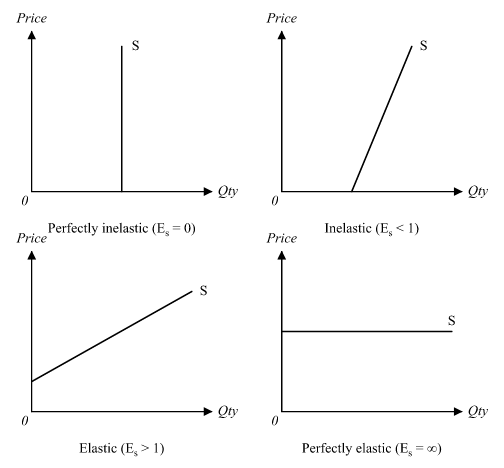 Model answer(a) (4 marks)Elasticity of supply is the degree of responsiveness of the quantity supplied of a commodity to a change in any of its determinants, such as its own price, prices of other commodities, costs of production or technologyPrice elasticity of supply is the degree of responsiveness of the quantity supplied of a commodity to a change in its own price only, other factors remaining constantPEs=% ΔP% ΔQsSo price elasticity of supply is one type of elasticity of supply; elasticity of supply is the wider term(b) (16 marks)Introduction: price elasticity of supply measures how far producers can change the quantity they offer when price changes. It depends on:1. Time periodIn the momentary period supply is perfectly inelastic; in the short run fairly inelastic; in the long run elastic, as firms can vary all factorse.g. a rise in matooke prices cannot raise supply until new plants mature2. Gestation (production) periodCommodities that take long to produce (coffee, tea, cattle) have inelastic supply; those produced quickly (bread, soft drinks) have elastic supply3. Nature of the commodity (perishability)Perishable goods (tomatoes, milk, fish) cannot be held back, so supply is inelastic; durable goods (cement, iron sheets) can be stored and released, so supply is elastic4. Availability of storage facilitiesWhere producers have warehouses and cold storage, they can adjust supply to price changes, making supply elastic; lack of storage makes it inelastic5. Availability and mobility of factors of productionIf extra labour, land, capital and raw materials are easily obtained and moved between uses, output can be raised quickly: elastic supply; immobile or scarce factors give inelastic supply6. Level of capacity utilisation (excess capacity)Firms with idle capacity and stocks can expand output easily when price rises: elastic supply; firms at full capacity have inelastic supply7. Cost of productionIf output can be expanded without a big rise in costs, supply is elastic; where extra output raises unit costs sharply, supply is inelastic8. Level of technologyAdvanced technology allows quick expansion or contraction of output: elastic supply; rudimentary tools (hand hoe agriculture) make supply inelastic9. Natural factors (weather, pests, diseases)Agricultural supply depends on rainfall and seasons, so it cannot respond quickly to price: inelastic supply; manufactured goods are less affected10. Ease of entry of new firmsWhere barriers to entry are low, new firms join the industry when price rises, making industry supply elastic; legal or capital barriers make it inelastic11. Government policyProduction quotas, licensing, price controls and heavy taxes limit producers' response, making supply inelastic; subsidies and incentives make it elastic12. Producers' expectations about future pricesIf producers expect prices to keep rising they hold back stock, so current supply responds little; expectation of falling prices makes them release supply quickly13. Objectives of the producer and risk-takingProfit-maximising, risk-taking producers respond quickly to price changes; subsistence producers who produce mainly for home use respond little (inelastic supply)14. Infrastructure and political stabilityGood roads, power and a peaceful environment let producers bring goods to market quickly: elastic supply; poor infrastructure and insecurity make supply inelasticEach well-explained factor earns about 2 marks; 8 factors are enough for 16 marksAnswer: (a) elasticity of supply = responsiveness of quantity supplied to any determinant; price elasticity of supply = responsiveness to the commodity's own price only(b) time period, gestation period, perishability, storage, factor availability and mobility, excess capacity, costs, technology, weather, entry of firms, government policy, expectations, producer objectives, infrastructureTip: For every factor, say which way it pushes supply (elastic or inelastic) and give a Ugandan example
© africaexams.com
Go to Question:
Advertisements