Test Index
UACE Geography 2022 Paper 1 (Physical Geography)
© africaexams.com
Question : 5
Total: 8
Solution:
What we are solving(a) Explain how coral landforms developed along the East African coast (15 marks)(b) Explain the economic importance of coral landforms (10 marks)Chapter: Coastal landformsTopic: coral reefs and coral landformsKey ideasCoral is limestone made from the skeletons of tiny marine animals called coral polyps, which live in colonies with algaeCoral landforms: fringing reefs, barrier reefs, atolls, coral islands, lagoons and raised coral platforms/cliffsEast Africa: fringing reefs from Malindi and Watamu to Diani (Kenya) and along Tanzania; coral islands such as Mafia and parts of Zanzibar and Pemba; raised coral at Mombasa islandModel answer(a) (15 marks)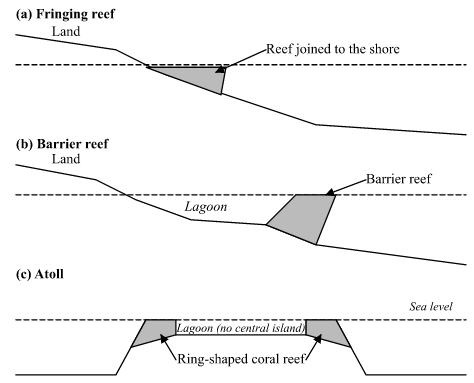 1. Warm sea waterPolyps need water at about 20∘C to 29∘C; the warm Mozambique and East African Coast currents keep the coast warm2. Clear, sediment-free waterMud blocks the polyps' mouths and cuts off light; reefs are absent opposite the mouths of the Rufiji, Tana and Pangani3. Shallow water and sunlightPolyps live with algae that need sunlight, so reefs grow in water less than about 60 m deep4. Saline, well-oxygenated waterNormal sea salinity and waves that bring oxygen and plankton food favour growth5. Wide, shallow continental shelfGives a platform on which polyps can attach and build up6. Growth and accumulation of skeletonsDead polyps leave limestone skeletons that are cemented by algae and shells into reef rock7. Subsidence theory (Darwin)As the land/sea floor sank slowly, the reef grew upwards: a fringing reef became a barrier reef separated by a lagoon, and around a sinking island an atoll8. Changes of sea level (glacial control theory, Daly)After the Ice Age sea levels rose; corals grew up on wave-cut platforms, forming reefs and lagoons9. Fall of sea level / uplift of the coastOlder reefs were raised above the sea, forming raised coral platforms, cliffs and coral rag, e.g. Mombasa and Zanzibar10. Wave action and depositionWaves break off coral and pile sand on reefs, forming coral islands and beaches(b) (10 marks)1. TourismMarine parks with reefs, e.g. Watamu, Malindi, Kisite-Mpunguti (Kenya), Mafia Island Marine Park (Tanzania), earn foreign exchange2. Fishing groundsReefs and lagoons are rich in fish, lobsters and octopus3. Building materialsCoral stone (coral rag) and lime are used for building, e.g. old Mombasa and Stone Town, Zanzibar4. Cement manufactureCoral limestone is raw material for cement, e.g. Bamburi Cement near Mombasa5. Protection of the coastReefs act as breakwaters, reducing wave erosion6. Natural harbours and calm anchoragesLagoons behind reefs give sheltered water for small boats7. Land for settlement and farmingCoral islands and platforms are settled and farmed, e.g. coconut and clove growing on Zanzibar and Pemba8. Research and educationReefs are studied by marine scientists9. Negative: hazards to navigationReefs wreck ships, so ports need marked channels10. Negative: poor soils and water shortageCoral soils are thin and porous, so farming is limitedConclusionCoral landforms result from the growth of polyps in warm, clear, shallow and salty water, helped by changes in sea level and land levelThey are mainly beneficial, especially for tourism, fishing and building materialsAnswer: (a) warm water, clear water, shallow sunny water, salinity/oxygen, continental shelf, accumulation of skeletons, subsidence, sea-level rise, uplift, wave action; (b) tourism, fishing, building stone, cement, coastal protection, harbours, settlement, research; hazards to shipping, poor soilsTip: Link each condition for coral growth to an East African place where it is or is not met
© africaexams.com
Go to Question:
Advertisements